Basa converts skeptics. That's the whole pitch of this article, and after a decade of cooking it for picky eaters at our farm table, I'll defend the claim against any other white fish at a typical American supermarket. Basa is mild, lean, fast, and forgiving. It doesn't smell up the kitchen. It costs a fraction of cod or halibut. A beginner cook can mishandle it and still come out with something the skeptic will eat.
What follows is a practical, feel-good guide to basa fish: seven reliable basa fish recipes I come back to again and again, smart buying tips for choosing the best fillets, and clear answers to the questions readers ask most about cooking and enjoying basa fish at home.
TL;DR Quick Answers
• Does basa fish taste fishy? No. It's mild, slightly sweet, and one of the cleanest-tasting white fish you'll find. A fishy smell signals a freshness problem, not the species.
• What does basa taste like? Clean and mild, closer to tilapia or sole than to salmon. The flesh is tender and flaky.
• What's the easiest basa recipe for a beginner? Foil-baked basa with lemon, butter, and herbs at 400°F for twelve to fifteen minutes. Almost impossible to overcook.
• What's the best basa recipe for kids? Crunchy oven-baked basa fish sticks with homemade tartar. A freezer-aisle upgrade with real fish.
• Is basa healthy? Yes. Low-calorie, high-protein, with modest omega-3s. Choose responsibly farmed sources and rotate with other fish.
• How do I tell if basa is fresh? Pale pink to off-white, firm to the touch, clean smell. Skip anything gray, mushy, or strong-smelling.
• Can you cook basa from frozen? Best results come from thawing in the fridge overnight. A cold-water thaw works in thirty to forty-five minutes if you're in a hurry.
Top Takeaways
• Basa is mild, lean, and tender. It's the most skeptic-friendly white fish you'll find in a typical American supermarket.
• A "fishy" smell almost always means a freshness problem, not a species problem. Trust your nose at the counter.
• Start skeptics with the fish tacos or the foil packet, where seasoning carries the dish. Build up to pan-seared and curry once they've come around.
• Look for ASC, BAP, or GlobalGAP certifications on the package for a more responsible sourcing choice.
• Most basa sold as "fresh" at U.S. counters was previously frozen. Buying it still frozen and thawing it yourself often gives you better texture.
• The Dietary Guidelines recommend two seafood servings a week. Most Americans don't hit it. Basa is one of the easiest ways to start.
What basa fish actually is
Basa is a freshwater catfish from the Mekong and Chao Phraya rivers in Southeast Asia. The scientific name is Pangasius bocourti. American supermarkets sell it under several names, including pangasius, swai, river cobbler, and Vietnamese cobbler. The flesh runs pale pink to off-white. The texture is soft and flaky. The flavor is gentle, much closer to tilapia than to salmon or mackerel. The Wikipedia entry on Basa is a solid quick reference, and the Chefs Resources Basa profile goes deeper into culinary handling for cooks who want the full picture.
Why basa doesn't taste "fishy"
Most of what people call a fishy taste comes from oxidized fish oils. The oilier the species, the more pronounced that flavor. Basa is naturally lean, low in those oils, and sold most often as fresh-frozen fillets that move quickly through the supply chain. That combination is why it reads as clean on the palate rather than aggressive. If a basa fillet ever does smell strong, you have a freshness problem, not a species problem.
The 7 basa fish recipes
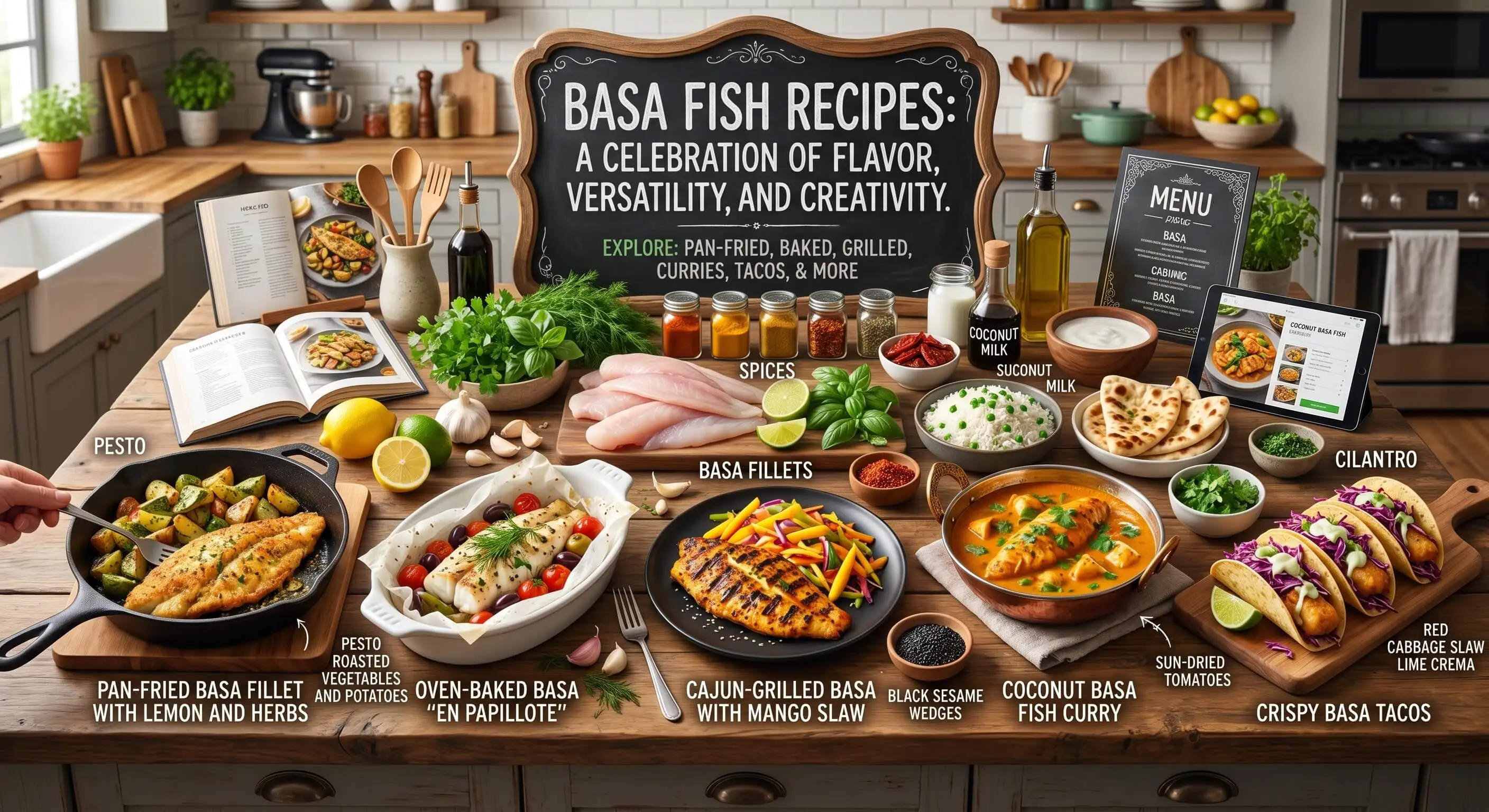
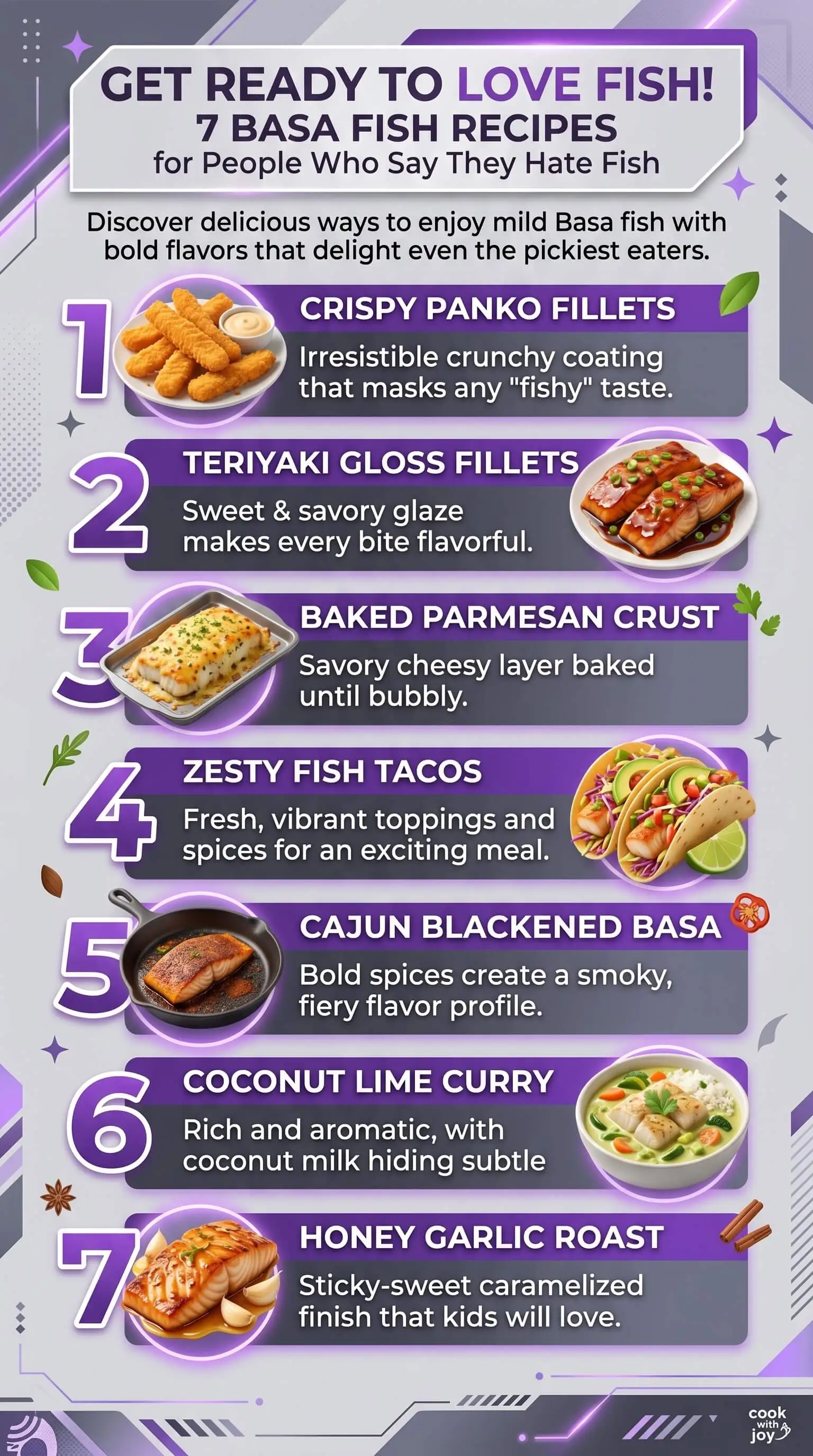
Each one takes thirty minutes or less. None require special equipment beyond a skillet, a sheet pan, or a piece of foil. I've ordered them from easiest to most ambitious, so you can start where you're comfortable.
1. Crispy Pan-Seared Basa with Lemon Butter
My weeknight default. Pat the fillet bone-dry with paper towels. Heat oil in a steel skillet until it shimmers. Three minutes a side, then finish with a knob of butter and a hard squeeze of lemon. The golden crust does the convincing. Most skeptics commit to it before they've cleared the first bite.
2. Crunchy Oven-Baked Basa Fish Sticks
The kid recipe. Cut the fillet into finger-length strips. Dredge in flour, dip in beaten egg, then press into panko mixed with garlic powder and a pinch of paprika. Bake at 425°F for about twelve minutes, until the coating reaches the color of a brown paper bag. Stir mayo with chopped dill pickles, lemon, and a dot of mustard for tartar. Faster than any freezer brand and made of one ingredient you can pronounce.
3. Basa Fish Tacos with Quick Cabbage Slaw
Season the fillets with chili powder, cumin, and lime. Sear or grill. Pile into warm corn tortillas with shredded cabbage tossed in lime juice and cilantro, then drizzle with crema. The slaw and citrus do most of the talking. The fish carries the dish without dominating it. That's exactly what you want when the objection in your house is "I just don't like the flavor of fish."
4. Creamy Garlic Basa Skillet
Sear the fillets and set them aside. Build the sauce in the same pan: butter, six cloves of minced garlic, a splash of white wine or chicken broth, a pour of heavy cream, a fistful of parsley. Slide the basa back in long enough to warm through. Serve over mashed potatoes, rice, or pasta. The cream sauce is the disguise that makes the whole thing work.
5. Cajun Blackened Basa
For the partner who only likes fried fish at a beach shack. Mix paprika, cayenne, garlic powder, onion powder, dried thyme, oregano, salt, and pepper. Press the rub firmly into both sides of the fillet. Sear in a screaming-hot cast-iron pan for about three minutes a side. The bold spice masks any whisper of seafood and gives you the same charred punch as a deep-fried piece, with none of the oil.
6. Lemon-Herb Foil-Baked Basa
The no-smell recipe. Place each fillet on a square of foil. Top with butter, slices of lemon, sliced garlic, and whatever fresh herbs you have growing. Dill, parsley, and thyme all work. Fold into a packet. Bake at 400°F for twelve to fifteen minutes. Open it at the table. The steam carries lemon and garlic, not fish. Critical for households where someone has refused seafood on smell alone.
7. Basa Coconut Curry
The showstopper. Sauté onion, garlic, and ginger in a heavy pot. Stir in a heaping tablespoon of red curry paste and let it bloom for a minute. Pour in a can of coconut milk, simmer, then add cubes of basa. Six to eight minutes of gentle poaching is plenty. Finish with lime juice, a splash of fish sauce, and torn basil leaves. Serve over jasmine rice. This is the recipe that my brother-in-law took down.
How to pick good basa at the store
• Color: pale pink to off-white. Skip anything with gray edges or yellow tints.
• Texture: firm. The flesh should spring back when poked, not stay dented.
• Smell: clean, like river water. Anything stronger means the fillet has aged out.
• Sourcing: look for ASC, BAP, or GlobalGAP labels. They signal better farm practices.
• Frozen vs. fresh: most "fresh" basa at U.S. counters was previously frozen. Buying it still frozen often yields better texture and more cooking flexibility.
How to store and thaw basa
Refrigerate raw basa in the coldest part of the fridge as part of smart kitchen management and cook it within a day or two of thawing. For longer storage, freeze it tightly wrapped at 0°F. To thaw, move it from freezer to fridge the night before. If you're in a hurry, seal it in a zip-top bag and submerge in cold water for thirty to forty-five minutes. Never thaw on the counter.
7 Essential Resources
Every link below has been verified. Use these to go deeper on the species, the safety guidance, and the broader role of seafood in a healthy diet.
1. Wikipedia — Basa (fish): en.wikipedia.org/wiki/Basa_(fish). The plain-language overview of the species, its biology, and how it ended up in supermarkets worldwide.
2. Chefs Resources — Basa Fish Profile: chefs-resources.com/seafood/finfish/basa-fish/. A working chef's reference on basa: flavor profile, yield, substitutions, and culinary handling.
3. FDA — Advice About Eating Fish: fda.gov/food/consumers/advice-about-eating-fish. The official chart for choosing fish based on mercury levels, with serving guidance for adults and children.
4. EPA — Advice About Eating Fish and Shellfish: epa.gov/choose-fish-and-shellfish-wisely. The EPA's companion guidance on safe seafood selection, especially useful for pregnancy and feeding children.
5. NOAA Fisheries — Fisheries of the United States: fisheries.noaa.gov/national/sustainable-fisheries/fisheries-united-states. NOAA's annual snapshot of U.S. seafood consumption, imports, and trends. The source most national reporting cites.
6. Healthline — Is Basa Fish Healthy? Nutrition, Benefits, and Dangers: healthline.com/nutrition/basa-fish. A medically reviewed walkthrough of basa's nutrition profile and the risks worth knowing.
7. Dietary Guidelines for Americans (USDA & HHS): dietaryguidelines.gov. The federal recommendations behind "eat seafood twice a week" and the policy backbone for most modern nutrition advice on fish.
3 Statistics
8. Americans ate 19.1 pounds of seafood per capita in 2023, and roughly 80% of it came from imports. Source: NOAA Fisheries — Fisheries of the United States. Most U.S. seafood comes from elsewhere, which is part of why species like basa, affordable and farmed and widely available, fill so many supermarket freezer cases, offering the kind of practical value a small farm household can appreciate.
9. Only about 24% of U.S. adults and roughly 8% of youth eat seafood at least twice a week. The Dietary Guidelines call for two servings a week. Most households fall short. Source: CDC NCHS Data Brief No. 538. A mild, easy-to-cook fillet like basa is one of the simplest ways to close that gap without overhauling your shopping list.
10. Vietnam produces roughly 70% to 80% of the world's pangasius, with annual exports topping $2 billion in recent years. Source: The Fish Site. Knowing where your basa comes from, and looking for sourcing certifications on the package, turns a generic supermarket purchase into an informed one.
Final Thoughts and Opinion
If I had to recommend one fish to a household that's been losing the seafood argument for years, I'd recommend basa every time, with skate fish as another option worth considering. Basa isn't the most prestigious fillet at the counter, and it doesn't have the omega-3 firepower of salmon or sardines. What it offers is the lowest barrier to entry of any fish at the supermarket: mild enough to disappear into bold seasoning, forgiving enough to survive an overcooked moment, cheap enough that a failed first attempt isn't a disaster. Like skate fish, basa can help hesitant eaters ease into seafood, but basa remains my go-to for winning over skeptics.
My honest opinion? Stop fighting the skeptic and start working with them. Begin with the tacos or the foil packet. Both keep the fish in a supporting role. Once your doubter has crossed the line into "fish I'll actually eat," the pan-seared and curry recipes follow naturally a week or two later. I've watched this play out at our table. Readers email me about it constantly. Basa is the on-ramp, not the destination.
One honest caveat. Basa is a farmed import, and farming practices vary. Buy from sources with credible certifications like ASC, BAP, or GlobalGAP, and rotate basa with other species so you're getting a wider nutrient profile and supporting a more diverse seafood supply. Wild salmon, sardines, and domestic catfish are all good rotation partners.
Frequently Asked Questions
Is basa fish actually safe to eat?
Yes. Basa from reputable suppliers is safe to eat when you cook it to an internal temperature of 145°F. As with any fish, choose responsibly farmed sources and check the FDA's Advice About Eating Fish for serving-size guidance, especially during pregnancy.
Is basa the same as swai or pangasius?
They're closely related and often used interchangeably at U.S. supermarkets. Basa is technically Pangasius bocourti. Swai is Pangasius hypophthalmus. Both are farmed pangasius catfish from Southeast Asia, and most home cooks won't notice a meaningful difference between them.
How is basa different from tilapia or cod?
All three are mild white fish. Basa has a softer, more delicate texture than tilapia or cod, and slightly more fat than cod. Cod is firmer and flakier. Tilapia is firmer with a slightly earthier note. Basa is the most tender of the three and the most forgiving for new cooks.
What's the best way to cook basa for someone who hates fish?
Lead with the fish tacos or the foil-baked recipe. Both surround the fillet with bold, familiar flavors: citrus, herbs, spices, crunchy toppings. The fish itself stays in the background. Once your skeptic is comfortable, the pan-seared and curry recipes are natural next steps.
Can I substitute basa for cod or haddock in recipes?
Yes, with one adjustment. Basa is more delicate than cod or haddock, so it can break apart with rough handling. Use a thin spatula, flip gently, and shorten the cook time by a minute or two. Otherwise it's a one-for-one swap in most baked, pan-seared, or curry recipes.
Is basa a sustainable choice?
Sustainability varies farm by farm. Look for ASC, BAP (Best Aquaculture Practices), or GlobalGAP certifications on the package. They signal better environmental and food-safety standards. Uncertified basa is more variable, so when in doubt, pay a little more for the certified product.
How much basa should I eat per week?
The Dietary Guidelines for Americans recommend two seafood servings (about 8 ounces total) per week for most adults. Basa absolutely counts toward that, ideally rotated with other species so you're getting a wider mix of nutrients.
Your Next Step
Pick one recipe from the seven above and put it on the menu this week. If you're cooking for a skeptic, start with the tacos. If you're cooking for yourself, start with the foil packet. Then come back and tell me which one finally crossed the threshold in your house, or whether skate fish was the recipe that changed minds at your table. Every reader story I get from a converted skeptic makes the case stronger.
If this article helped you, share it with the fish-skeptic in your life. Sometimes the only thing standing between someone and a great dinner is the right recipe.
